The New Gods
- Fiona, Goddess of Law, Good, Light, Cities, Artisans, War
- Baelok, God of Neutrality, Knowledge, Magic, Death, Greed
- Charnog, God of Chaos, Evil, Darkness, Nature, Weather, Blood
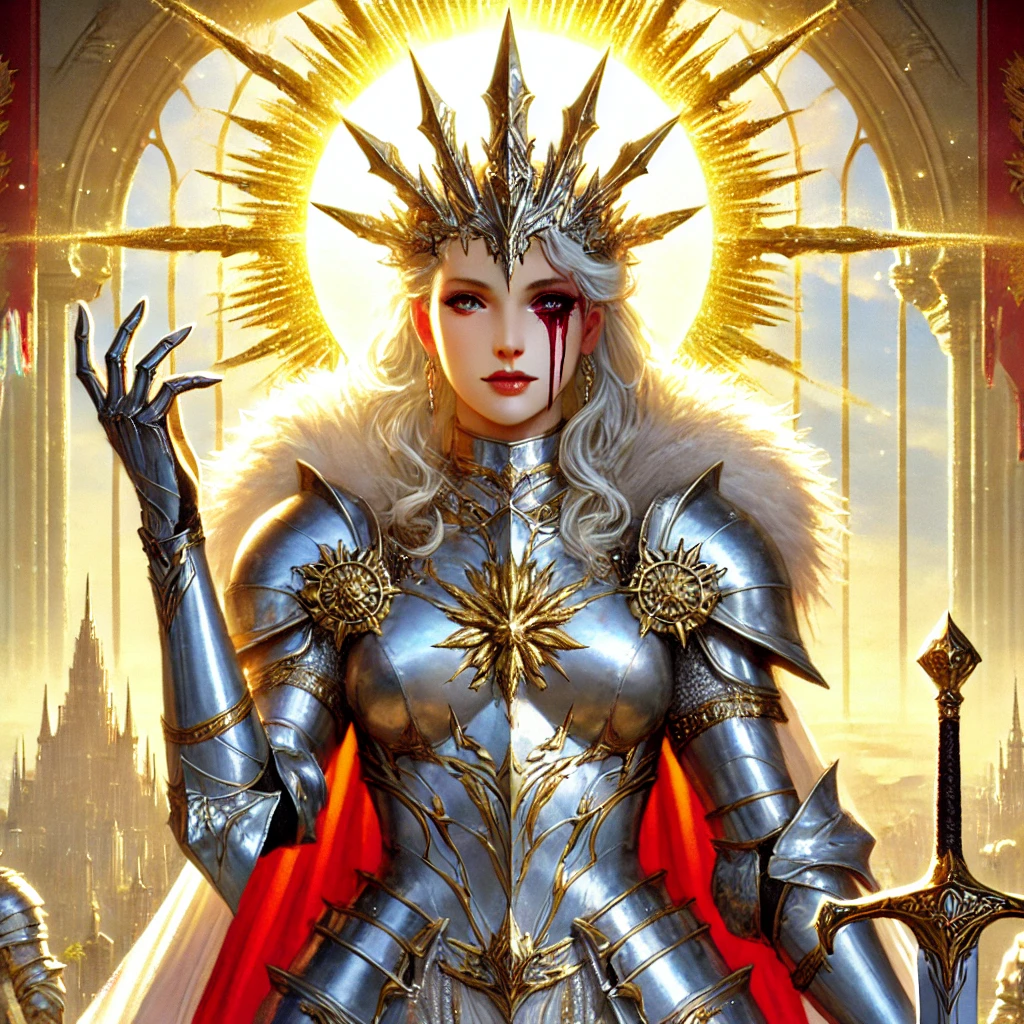
1. Fiona
- Domain: Law, Good, Light, Cities, Artisans, War
- Alignment: Any Lawful or Good
- Moon: Aetun, appears as a brightly glowing green and gold sphere covered in dark lines that resemble an enormous city. Scholars believe this may be the First City of legend.
- Symbols and Iconography: A gauntlet holding a sword with a golden sun behind it
- Characteristics: Appears as a regal figure in gleaming armor, wearing a crown of metal shards that cuts her brow, causing blood to drip into her eyes. She is quiet and dignified when dealing with mortals and only takes offense when told lies or shown cowardice on the field of battle.
- Followers and Worship: Fighters, Paladins, Bards, and Monks. Fiona attracts worship from those who seek to advance civilization or who find themselves in battle often. She is said to speak for the dead who held true faith in her, allowing them to escape the Procession of Echoes and live eternally in the paradise of the First City. In return, Fiona expects her followers to honor no other god and to live with honor and goodness. Her favor is believed to influence the outcome of battles, so she often receives prayers and sacrifices on the eve of major conflicts.
- Mythology and Stories: Fiona created the first great city while still a mortal, ruling it for centuries before her ascent to godhood. After becoming a goddess, Charnog, in a fit of jealousy, tried to destroy the First City with volcanic eruptions. Fiona returned at the last moment and lifted it into the sky, saving it. Unfortunately, the volcanoes led to the Long Ice, devastating the world for centuries.
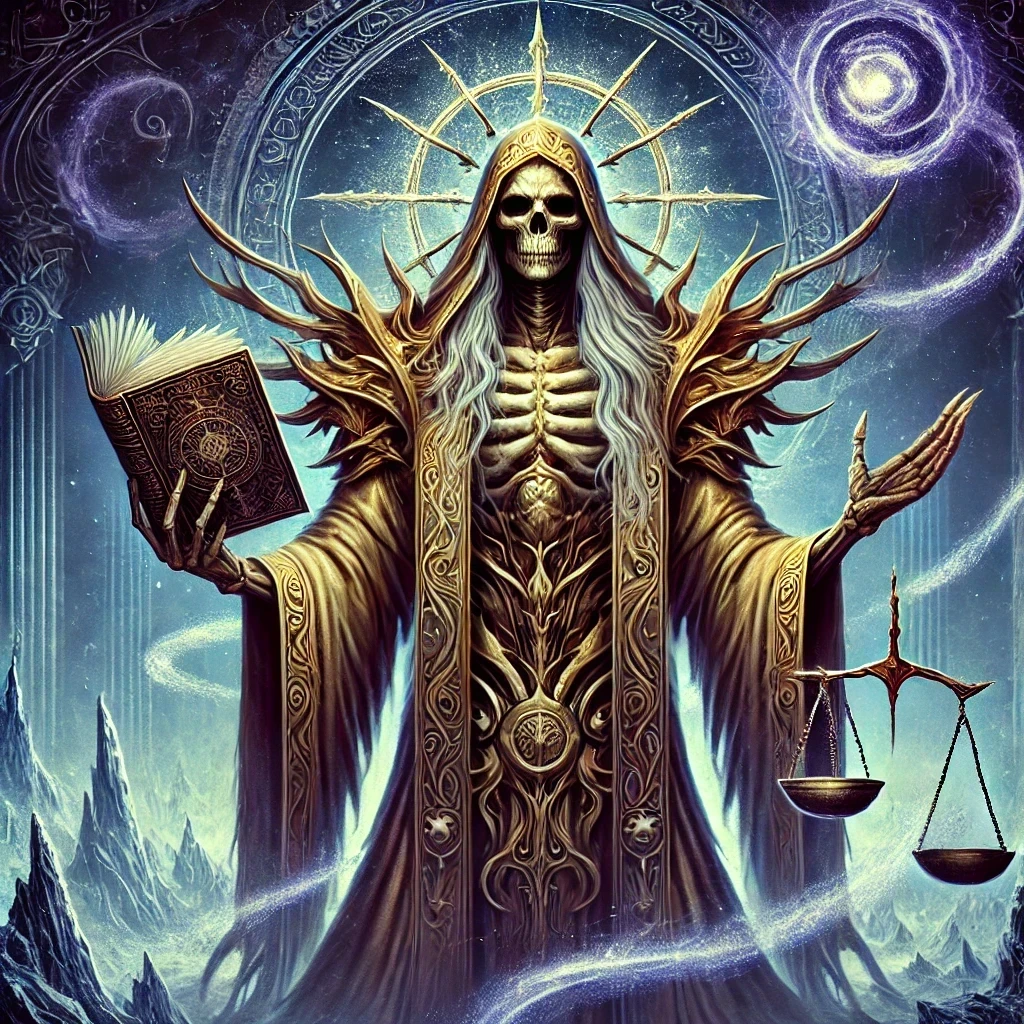
2. Baelok
- Domain: Neutrality, Knowledge, Magic, Death, Greed
- Alignment: Any Neutral
- Moon: Baetun, appears as a desolate and frozen hunk of purple rock with swirling blue mists around the equator. Scholars believe this blue mist is the Procession of Echoes.
- Symbols and Iconography: A skeletal hand holding a set of balance scales
- Characteristics: Appears as a skeleton in robes of spun gold, holding the Book of All Knowledge in one hand and the Scales of Worth in the other. Cold towards mortals, he resents their overlong lives that deny him his due. He only values knowledge, souls, and gold.
- Followers and Worship: Wizards, Rogues, and Necromancers. Followers of Baelok typically fall into two groups. The first consists of those who value knowledge or magical secrets above all else, such as scholars and various magic users. Baelok is believed to record every written word in his Book of Knowledge. Though miserly with his secrets, he may be bargained with in exchange for new knowledge to add to his tome. The second group includes those who value wealth above all else: merchants, bandits, and thieves. Baelok is mostly indifferent to his worshipers, occasionally sparing exceptional scholars from the Procession to serve as his advisors.
- Mythology and Stories: Baelok is considered the first and oldest of the gods, remembering a time before the Old Gods became distant. He refuses to speak of that time or why things changed. Baelok was the first to mint coins of precious metals and pays a Butcher’s Fee to any who slay a mortal with memories he considers valuable, provided their mind joins the Procession of Echoes. He spends his time writing in the Book of Knowledge with one hand while judging mortals with the other. When mortals die, Baelok judges them, and if no god speaks for them and they have not lived a life of worship to him, their souls merge with the Weave of Magic, while their minds join the Procession of Echoes to march endlessly across the Baetun moon.
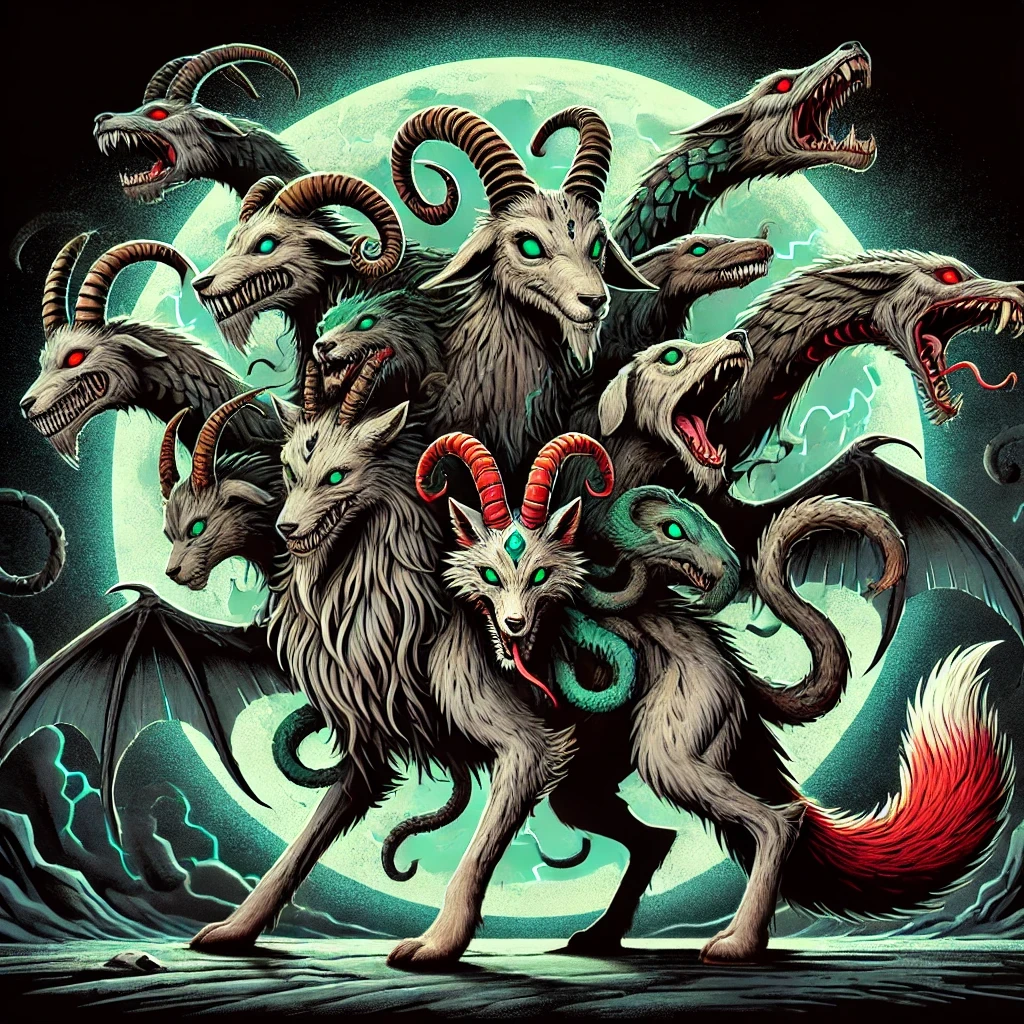
3. Charnog
- Domain: Chaos, Evil, Darkness, Nature, Weather, Blood
- Alignment: Any Chaotic or Evil
- Moon: Charnun, appears as a smooth dark sphere riddled with glowing green cracks, making it difficult to see against the night sky. Scholars believe the cracks’ glow is due to strange magma.
- Symbols and Iconography: A slathering wolf head with a dark moon behind it
- Characteristics: Appears as a terrifying chimera, with many wolf heads on a hydra’s necks, the body of a goat, wings of a dragon, and the tail of a fox. Completely unpredictable in temperament, he is said to have as many moods as he has heads. Regardless, he only speaks to mortals through one head at a time, with some heads being kindly, others babbling lunatics, and still others ravenous man-eaters.
- Followers and Worship: Barbarians, Druids, Rangers, Sorcerers, and Warlocks. Charnog’s worshipers are the most diverse of any god, reflecting his chaotic nature. Some honor him as a benevolent god of nature, while others seek his blessing for blood rage to aid in violent acts. Most of his followers quietly honor him to avoid his wrath, believing his favor can protect them from crop-destroying weather, monster attacks, plagues, and natural disasters. It is often said, "Fiona is worshiped out of love, Baelok out of need or greed, and Charnog out of fear." True motives seem not to concern him, as he accepts worship in all its forms.
- Mythology and Stories: Charnog was the last of The Three to ascend, but no mortal knows the truth of his ascension, as each head tells a different tale when asked, and the other gods remain silent on the matter. Despite being the youngest, Charnog is often considered the most powerful in many ways and is the god who most often interferes directly with the mortal world. Many believe the weather reflects his moods. He spends his time concocting new woes—such as diseases, natural disasters, and monsters—to inflict on mortals. Occasionally, he takes the form of a powerful beast to hunt them, and if a mortal impresses him by escaping or defeating him, he is known to grant them a boon.